
Projects
Projects
The Old School
The Old School
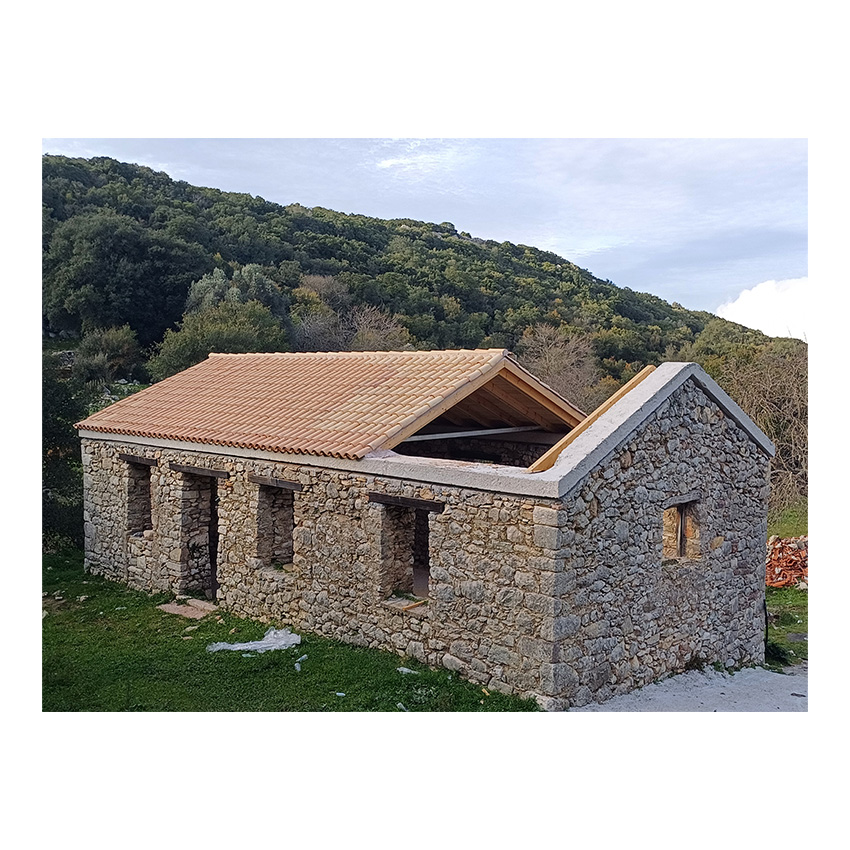
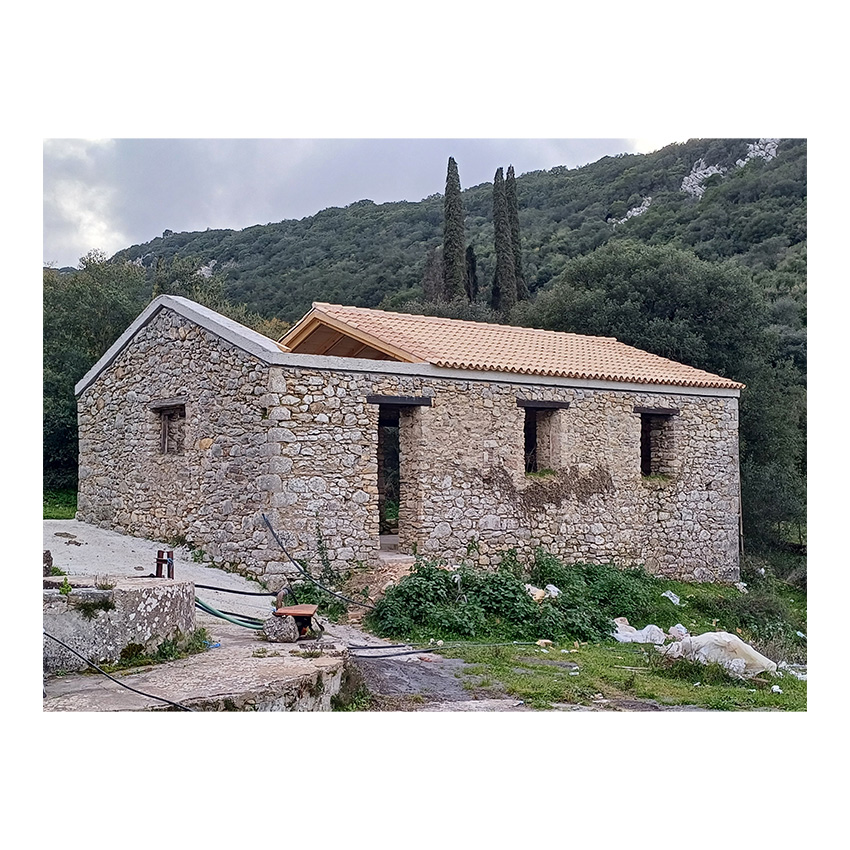
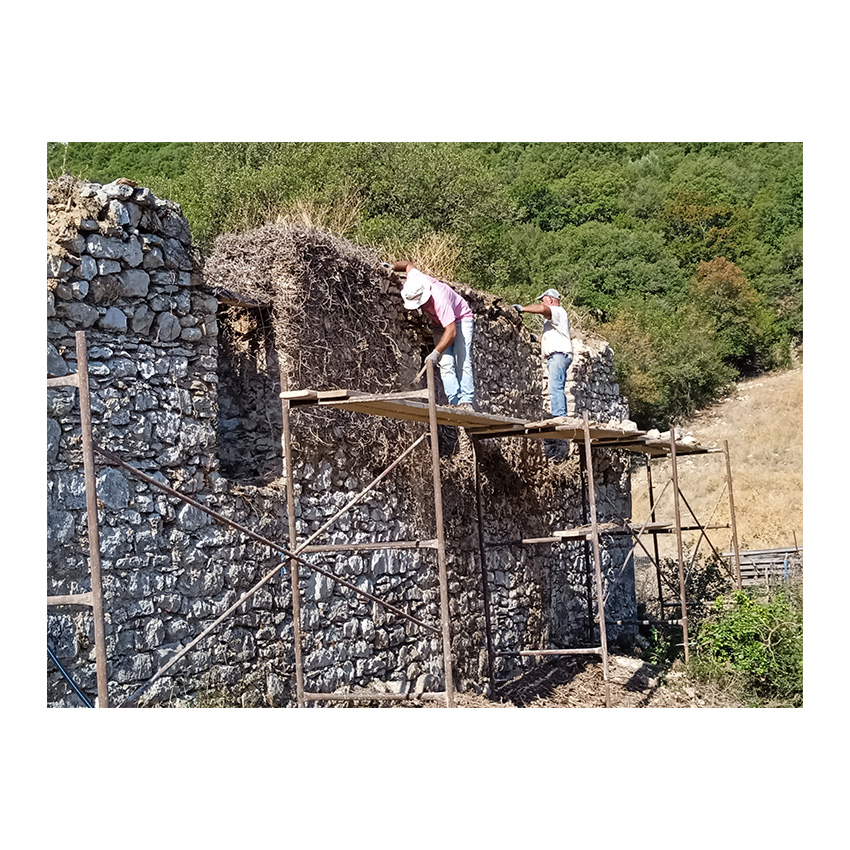
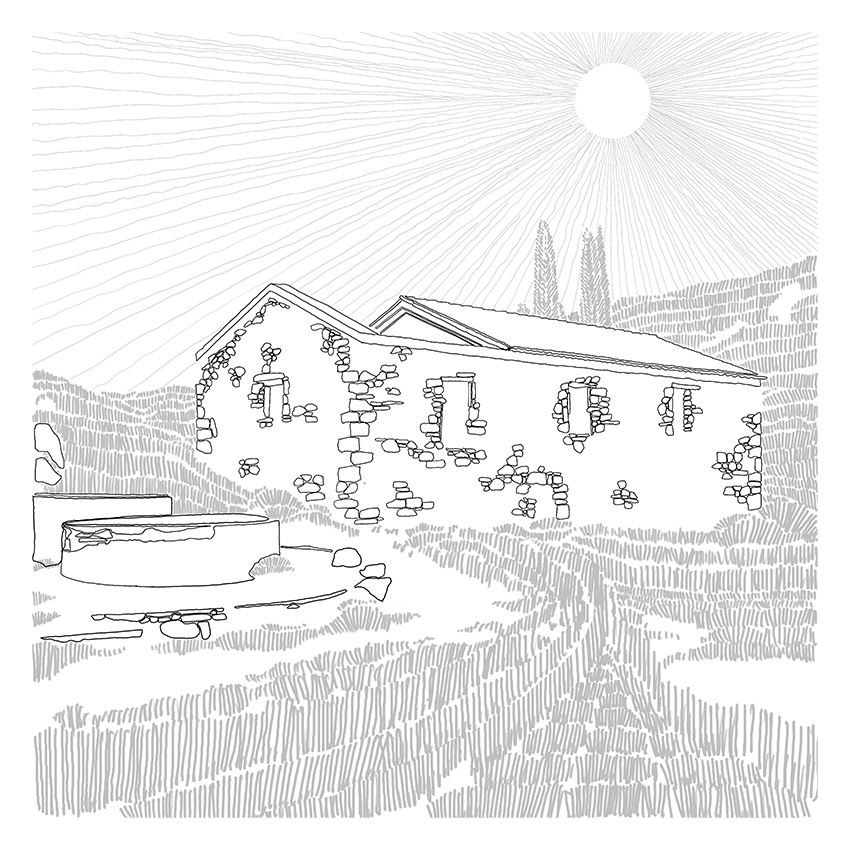
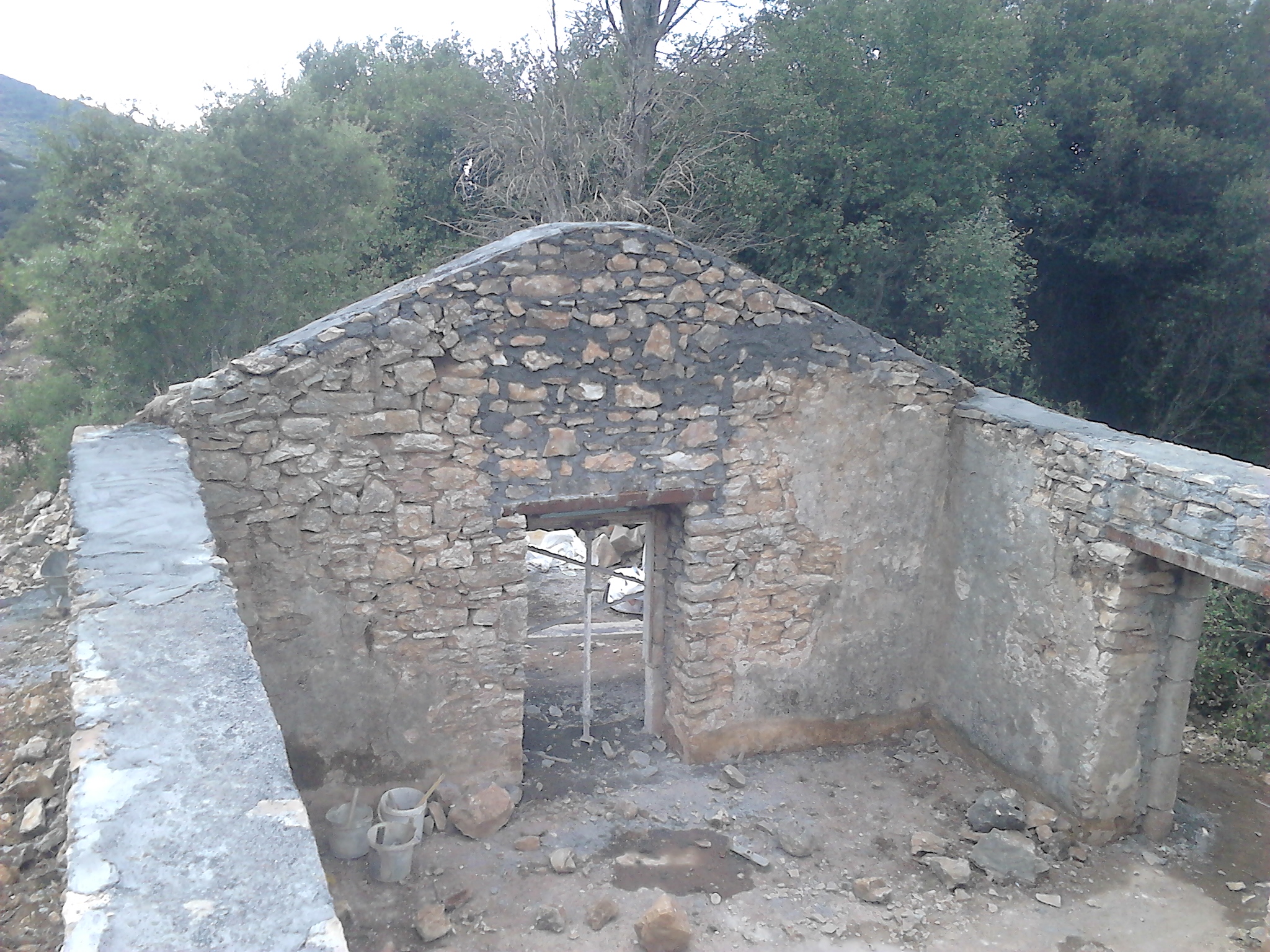
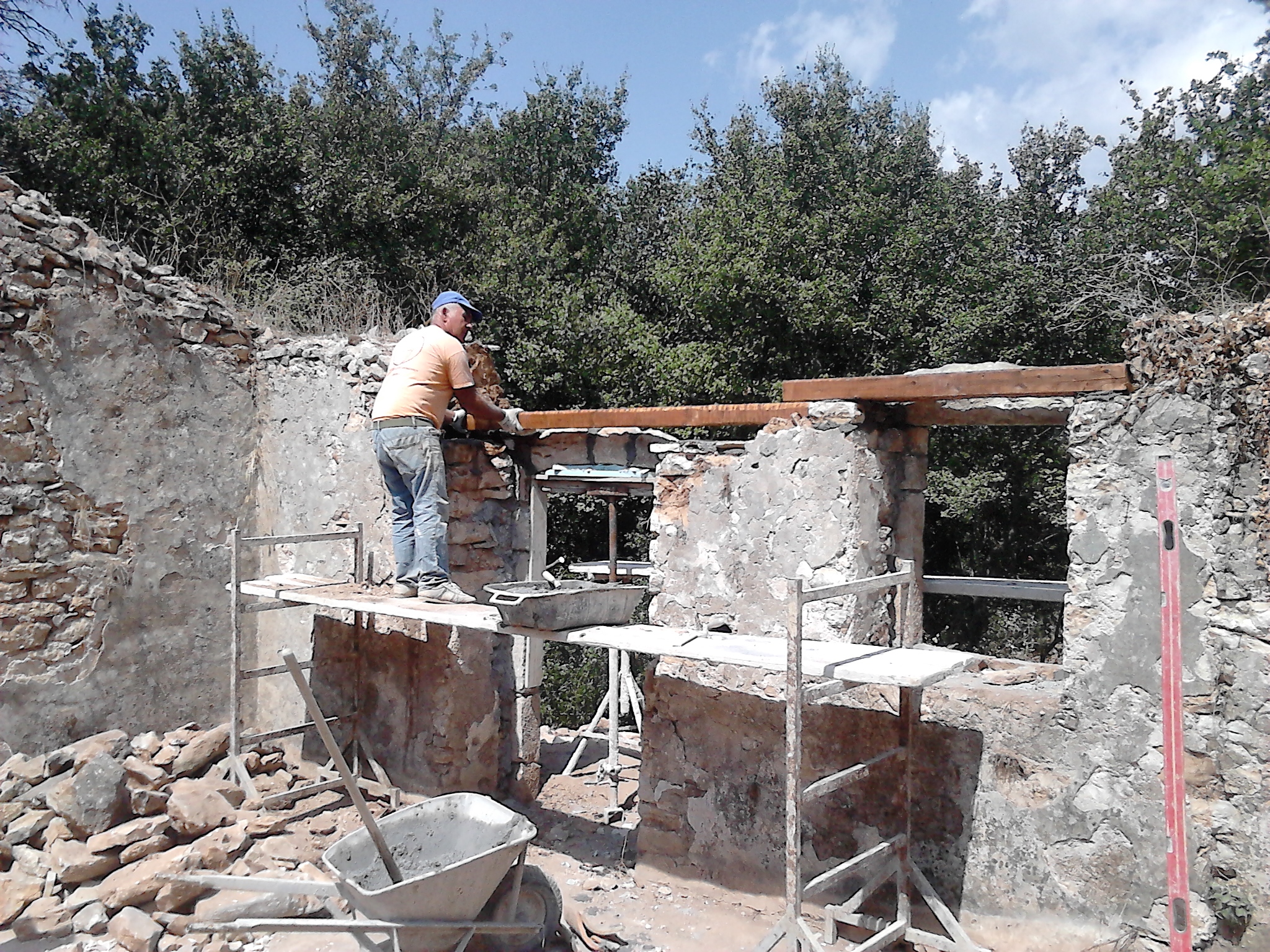
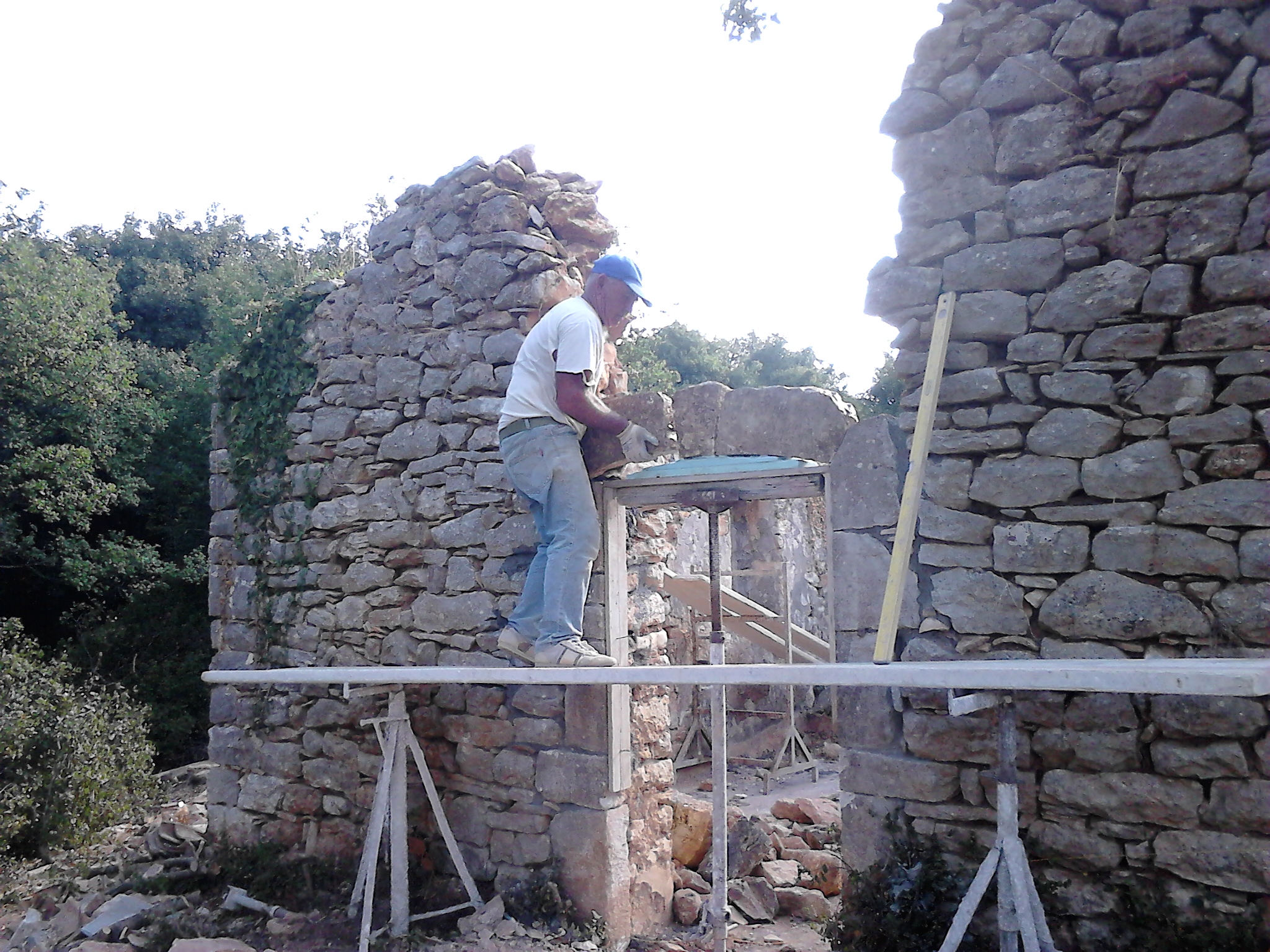
The old school of Romiri is one of the first buildings of the settlement, deeply rooted in its historical and collective memory. At the same spot where the first church was founded and the first well was constructed, the original structure was later transformed into a school, remaining in operation until the 1960s. Over the years, the building fell into ruin, losing its roof and much of its masonry.
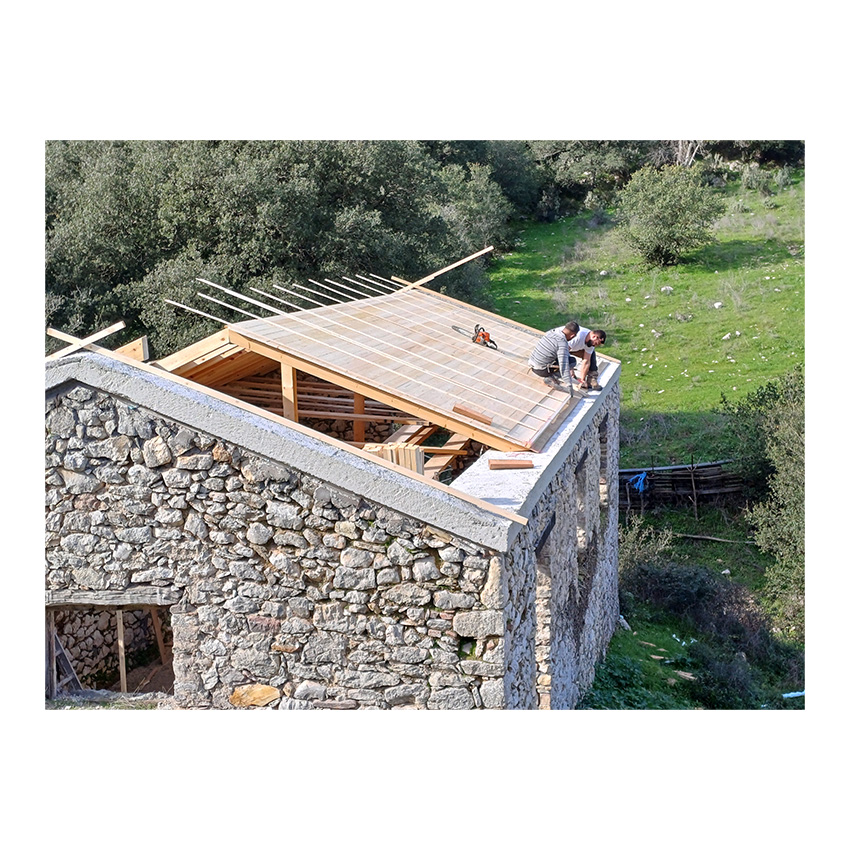
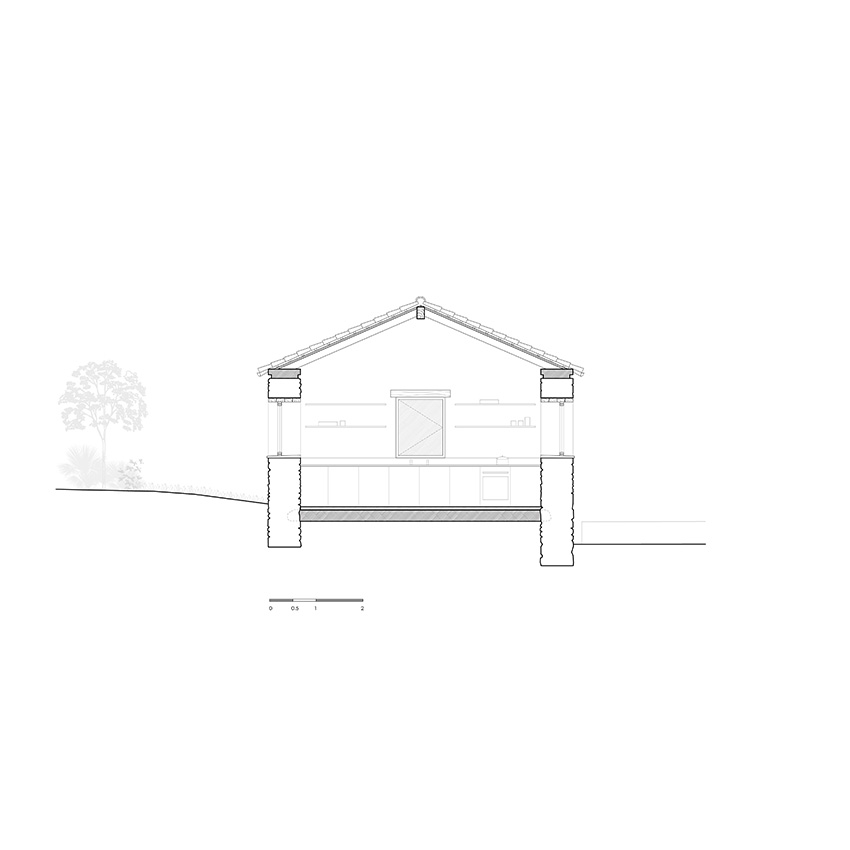
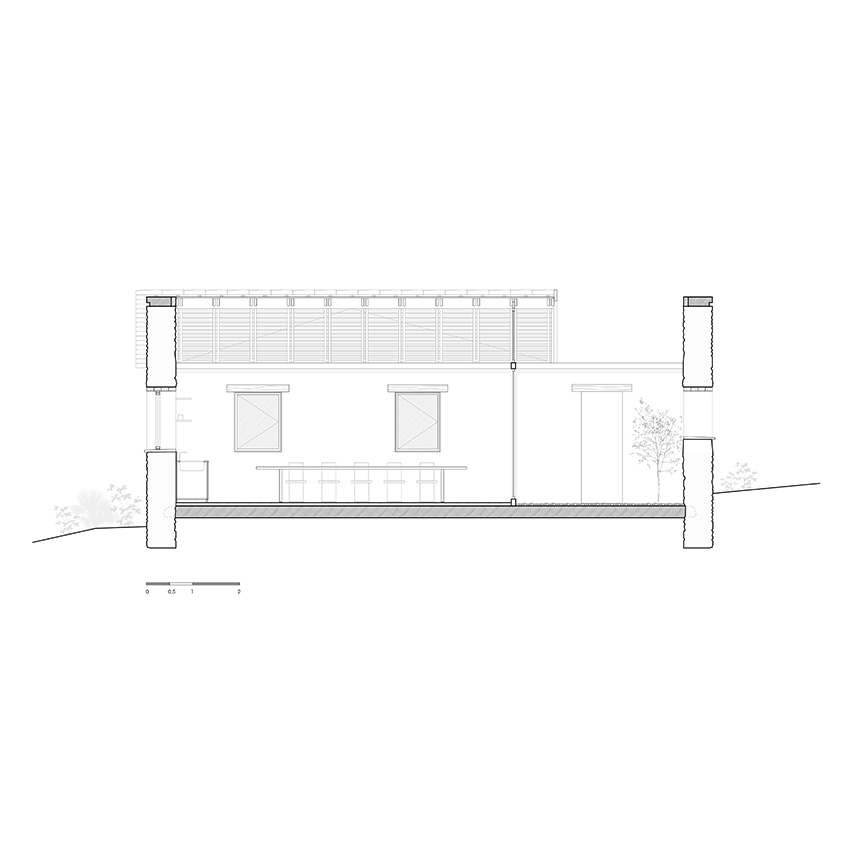
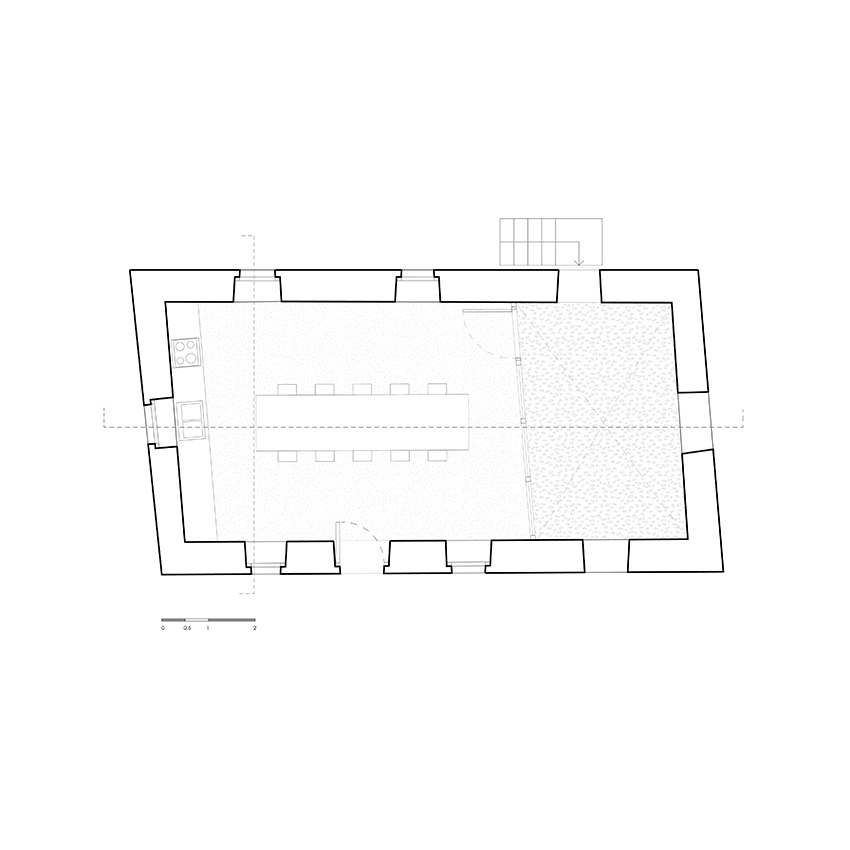
The architectural proposal preserves the layout and available materials, converting the old school into a new space for dining and recreation, organically integrated into the public area of the square. The original openings are maintained, while elements such as the timber framework at the former apse of the church act as reminders of the past.
The new wooden gabled roof, clad with Byzantine-style tiles, creates an open intermediate space between the building and the square — a point of transition, shade, and gathering. The interior remains simple, with wooden constructions serving basic needs, allowing the stone shell to dominate.
Through a modest yet meaningful intervention, the old school regains life and a public character, serving the contemporary needs of the village while respecting its history and architectural identity.
The Square
The Square
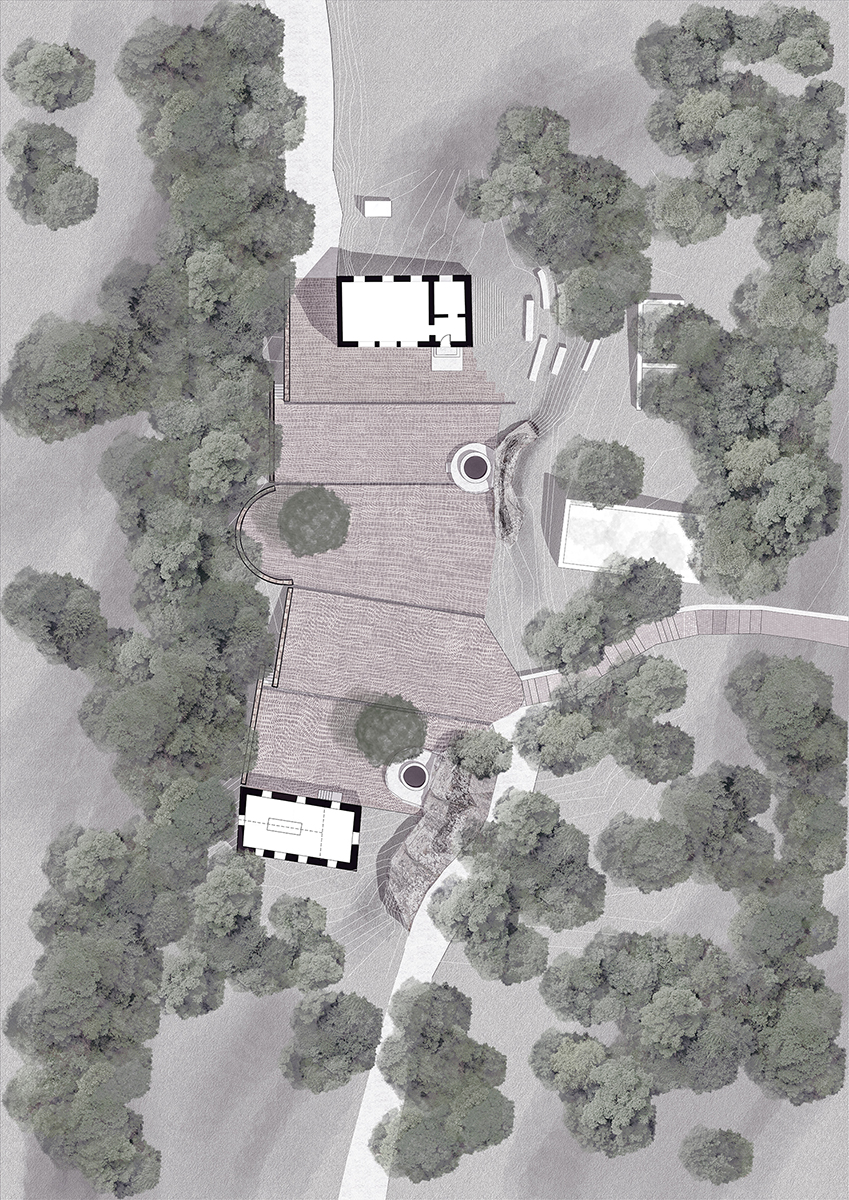
The square of Romiri, although never formally designed, has always been the main gathering and social space of the village. Within the framework of the architectural interventions, the area is being redesigned with respect for the settlement’s identity, so that it can now be recognized as the village’s central square.
Using local materials and traditional techniques, stone walls, pathways, and seating areas are created, while two old stone-built wells are highlighted as monuments to the cooperation between humans and nature. At the center, a centuries-old olive tree serves as a natural focal point, framed by low stone walls that “embrace” the space.
At the edge of the square, an open-air amphitheater with 80 seats is constructed for events. Thus, the square becomes a contemporary, vibrant core of community life.
The Cobblestone Path
The Cobblestone Path
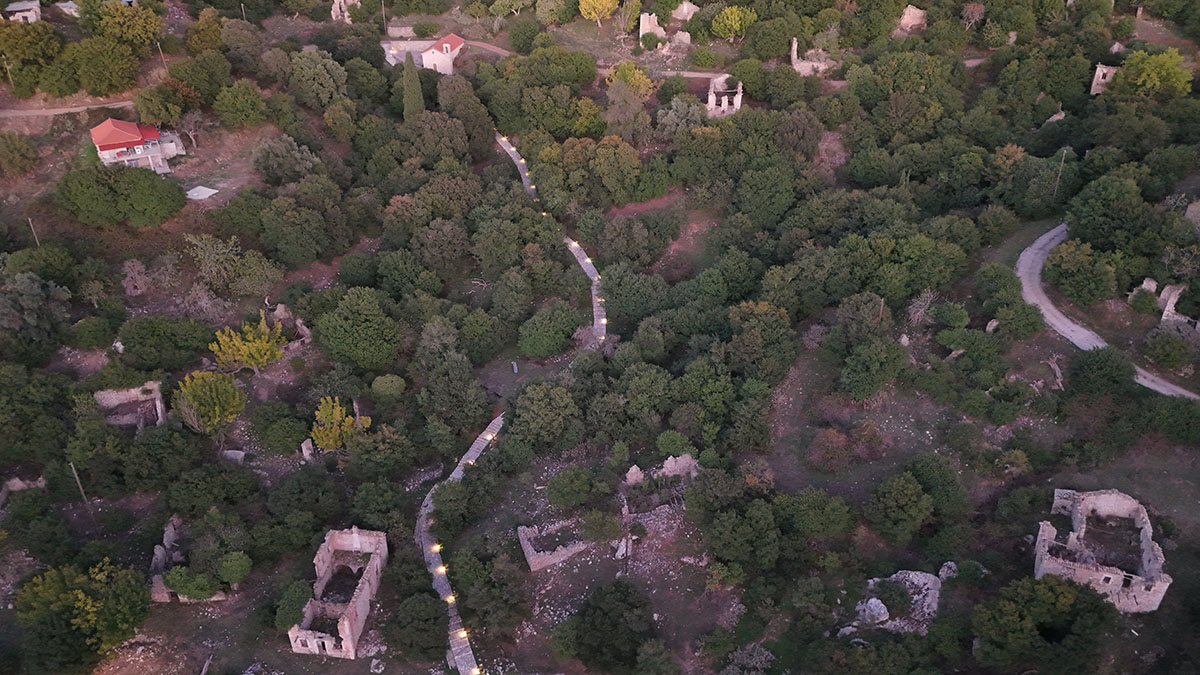
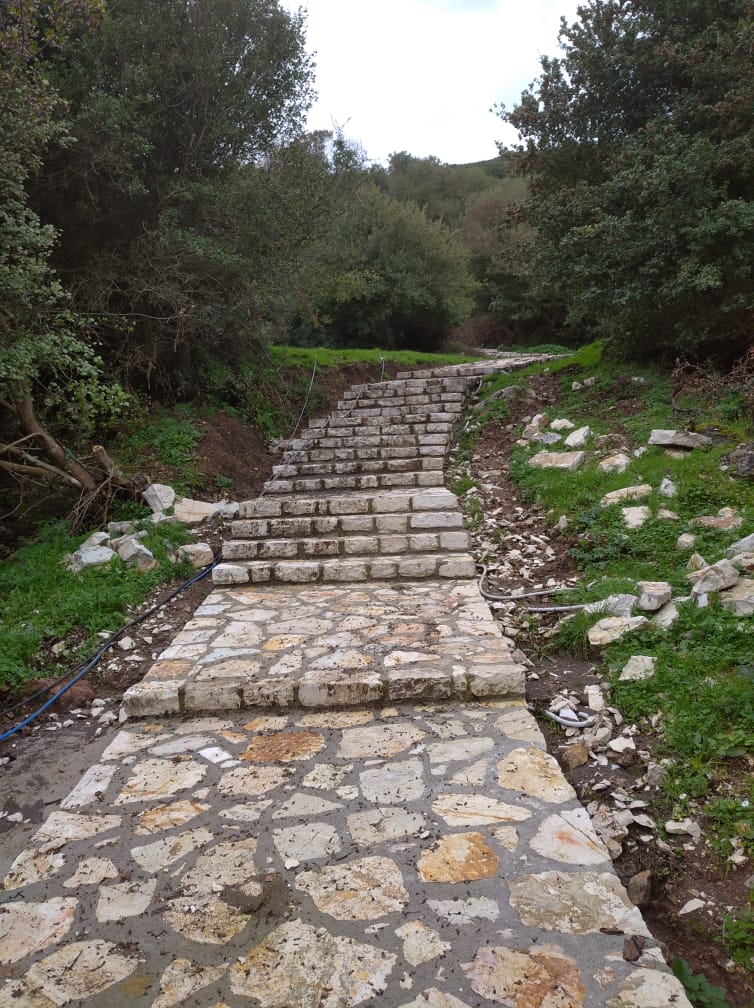
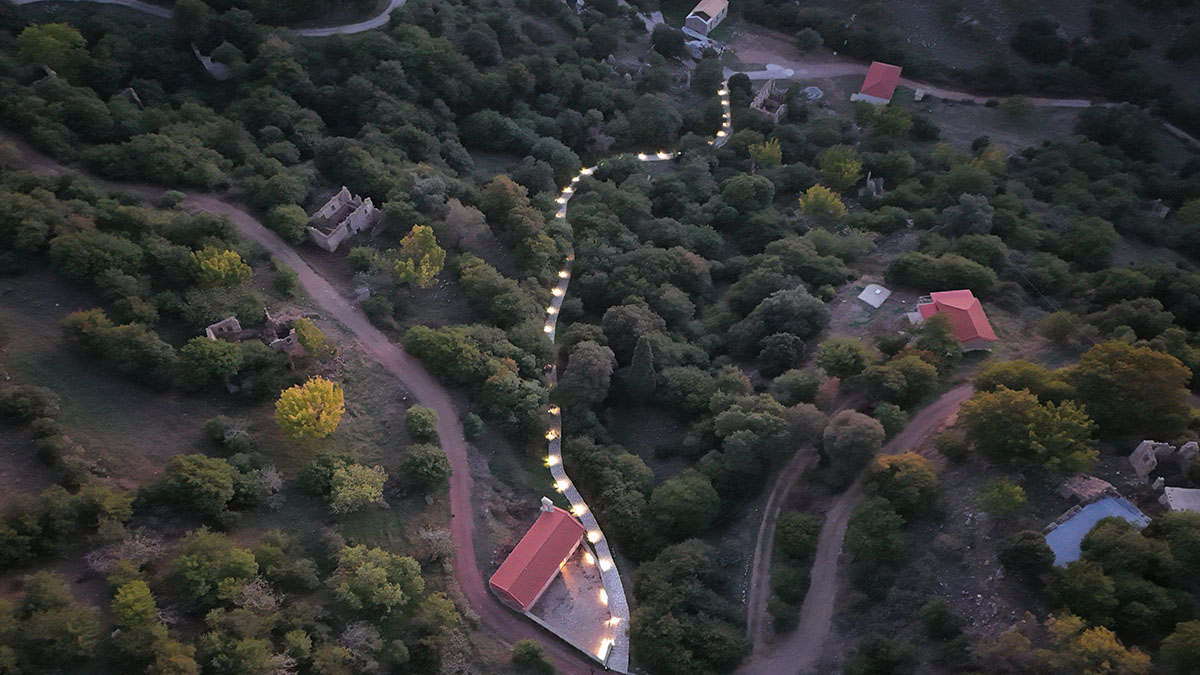
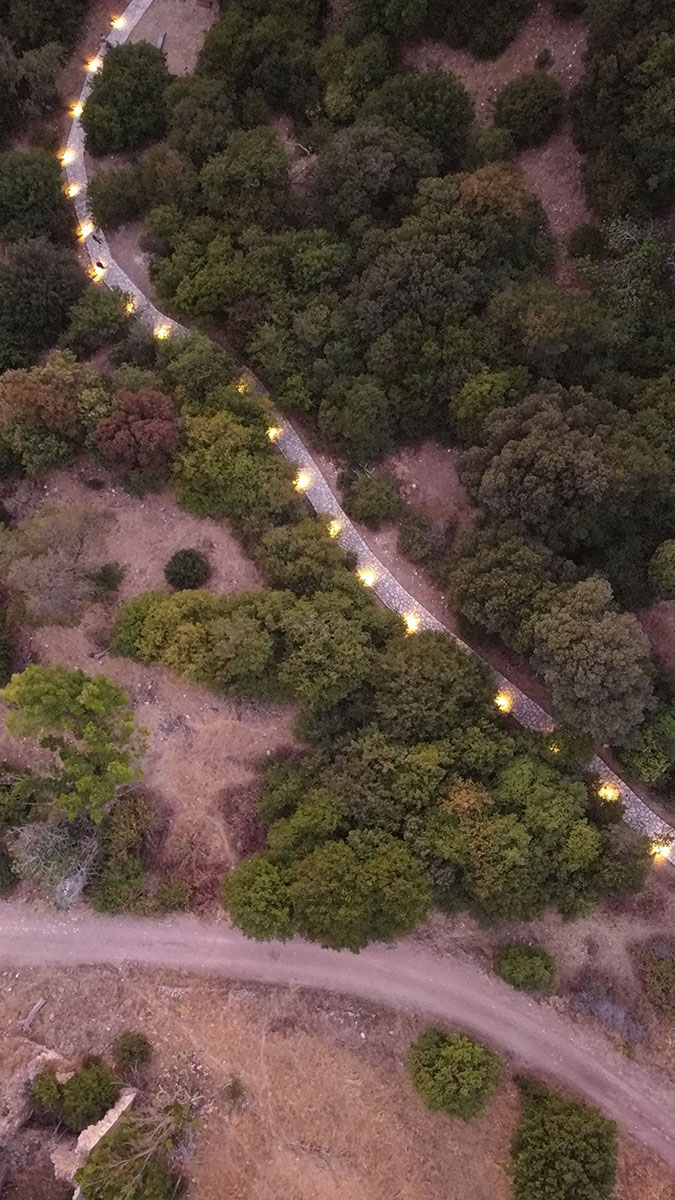
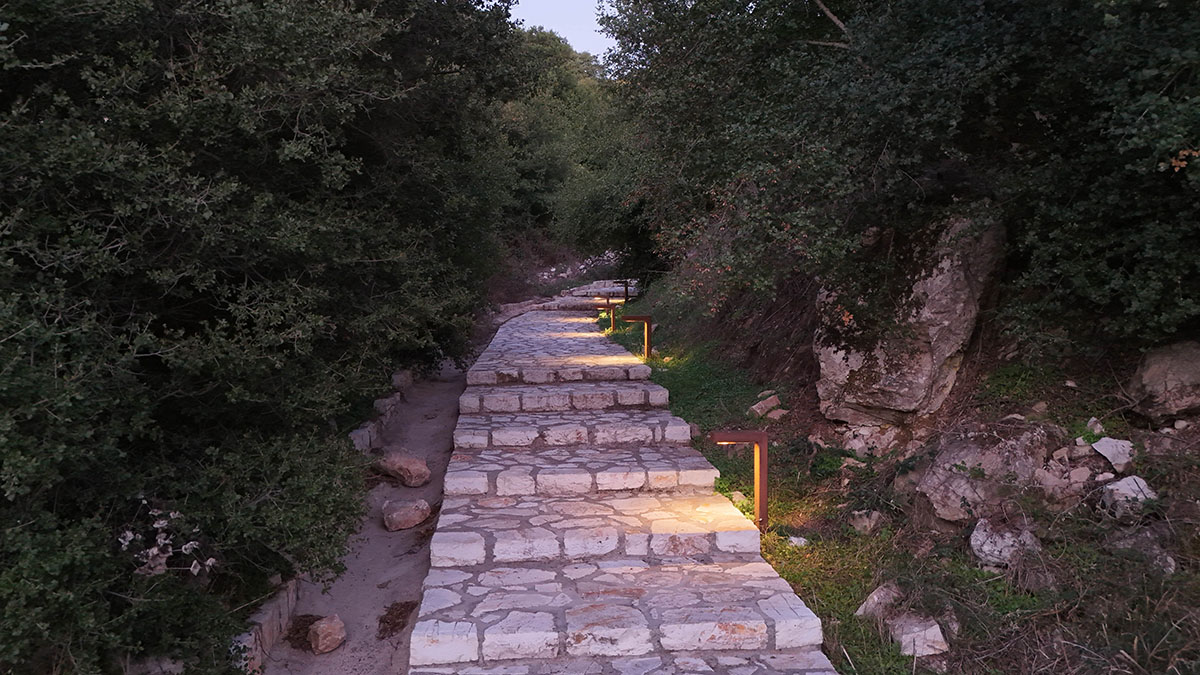
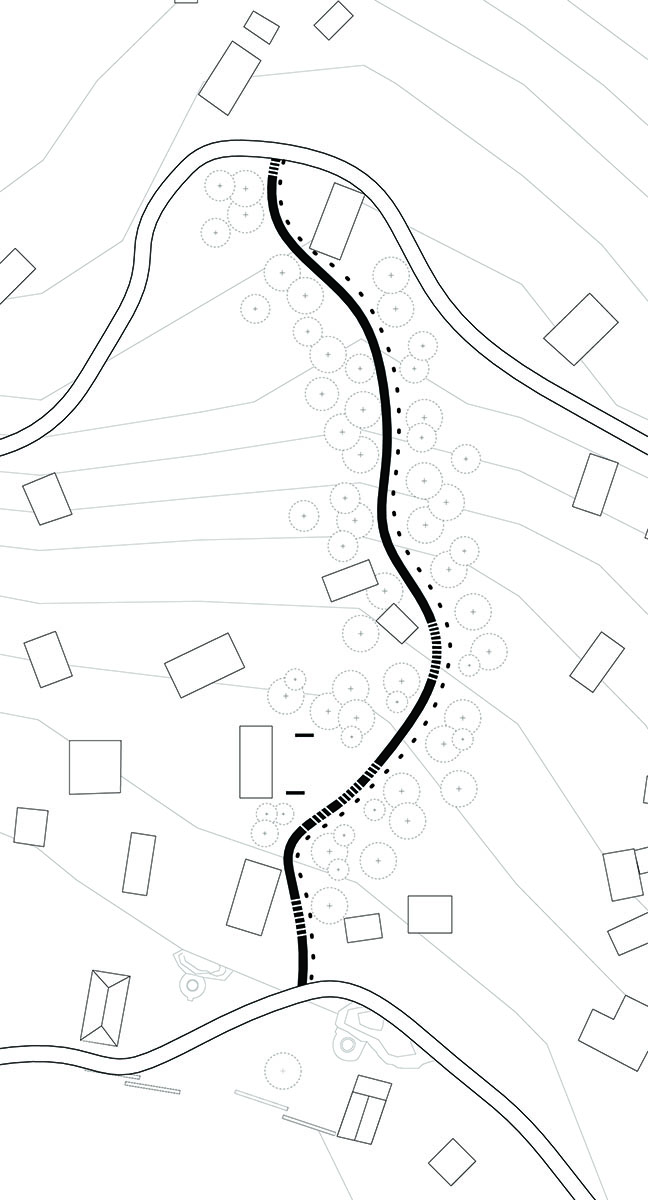
The cobblestone path (kalderimi) of Romiri was designed and built in situ using local stone, following the traditional paving technique characteristic of the settlement. It forms the main pedestrian route directly connecting the central square with the Church of Zoodochos Pigi, ensuring quick and functional communication between the Lower and Upper neighborhoods.
Beyond its practical purpose, the route is designed as a walking experience: along its length, small resting areas are integrated, furnished with seating and oriented toward selected viewpoints. These spots serve as places for rest and contemplation, highlighting the landscape and architecture of the village. With its materiality and geometry, the kalderimi blends harmoniously into the natural and built environment, while strengthening the cohesion of the village’s urban fabric.
Urban Equipment
Urban Equipment
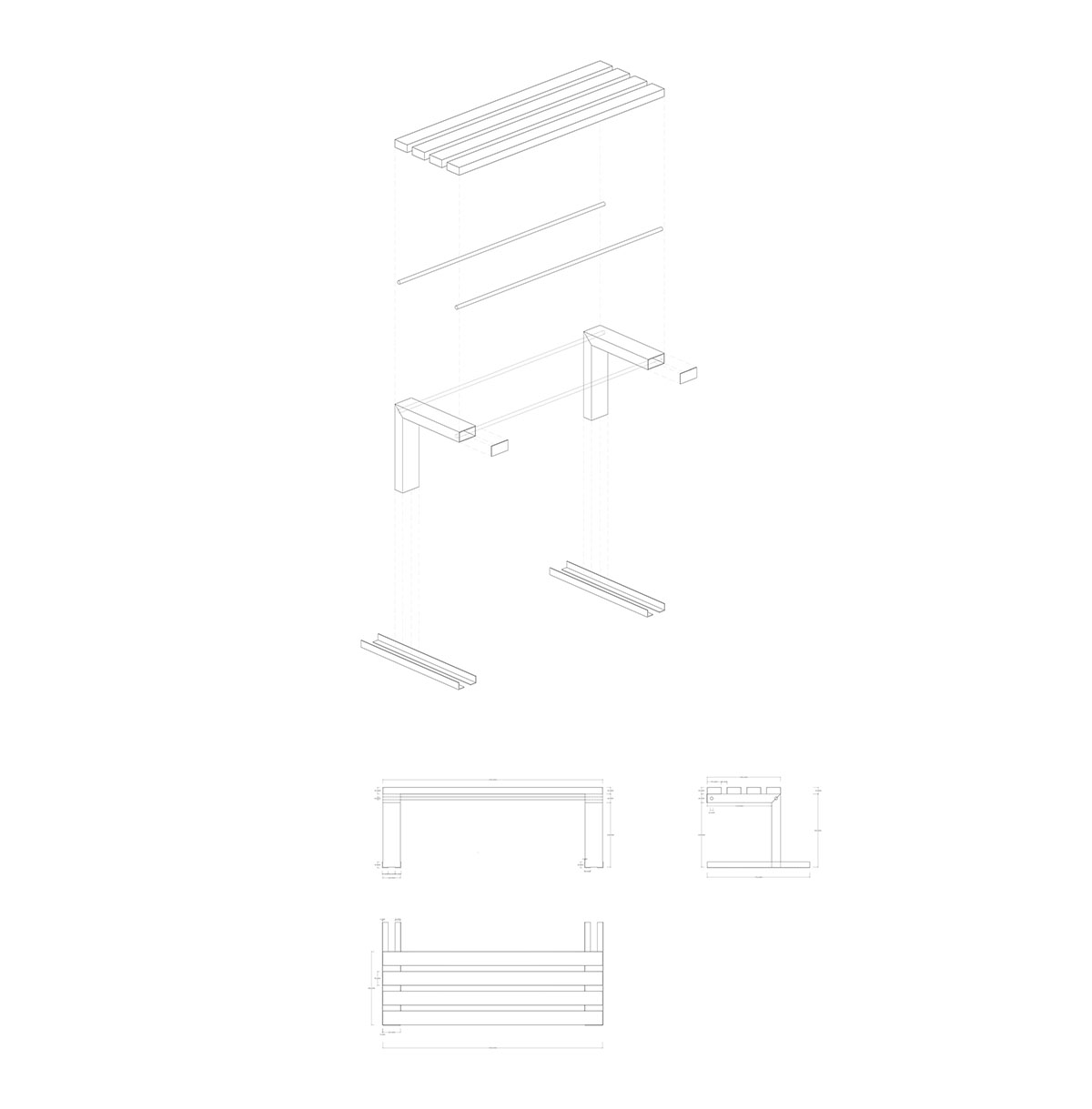
The urban equipment designed for the settlement includes benches, lighting elements, and signage for selected buildings. Constructed from corten steel—which naturally oxidizes over time—and wood, it achieves a balanced combination of durability and warmth. The benches feature wooden seats for comfort, while the signs provide discreet yet clear information about the architectural and historical heritage of the place. The design approach harmonizes with the village’s aesthetic, ensuring functionality and subtle integration into the public space.
Restoration of churches
Restoration of churches
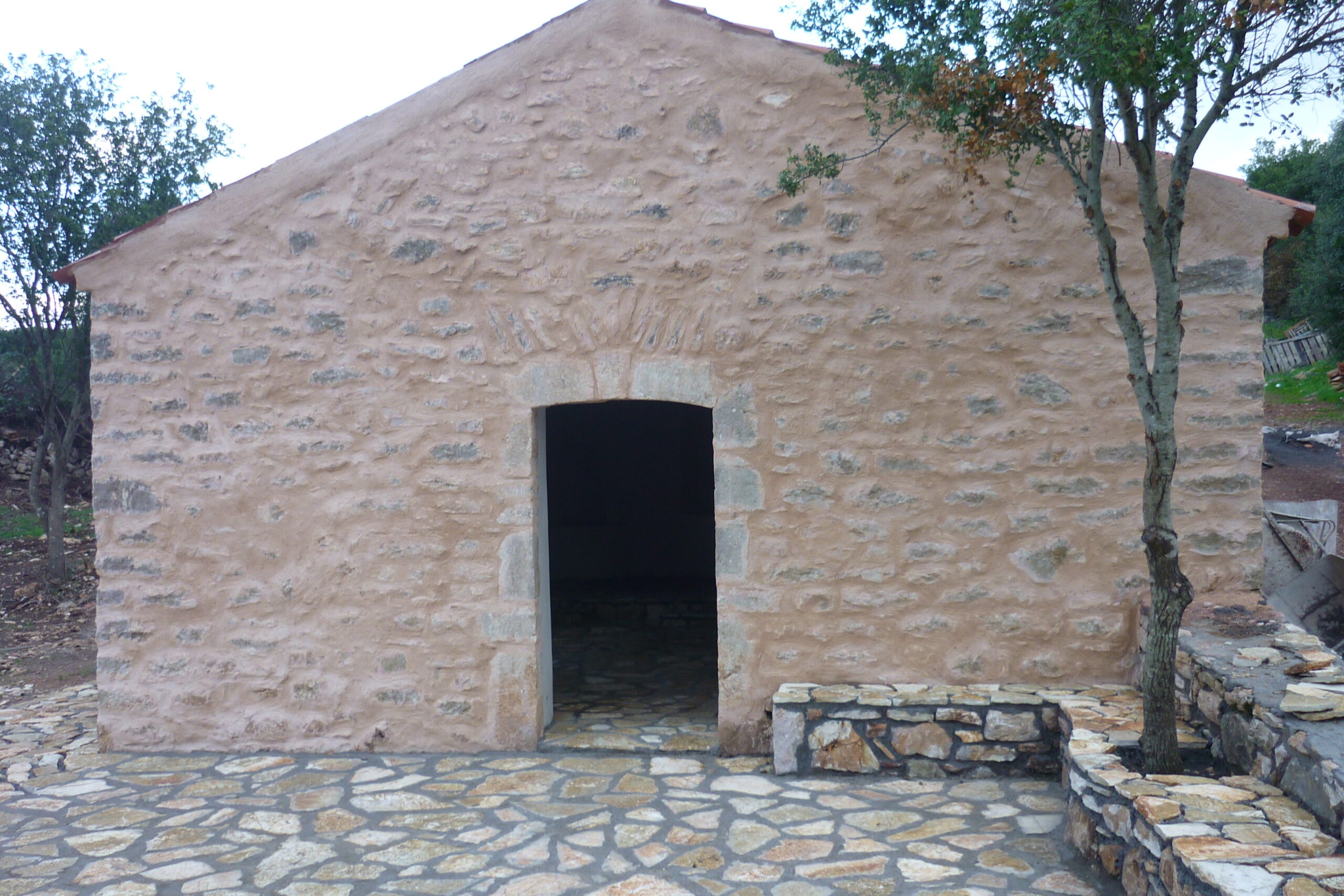
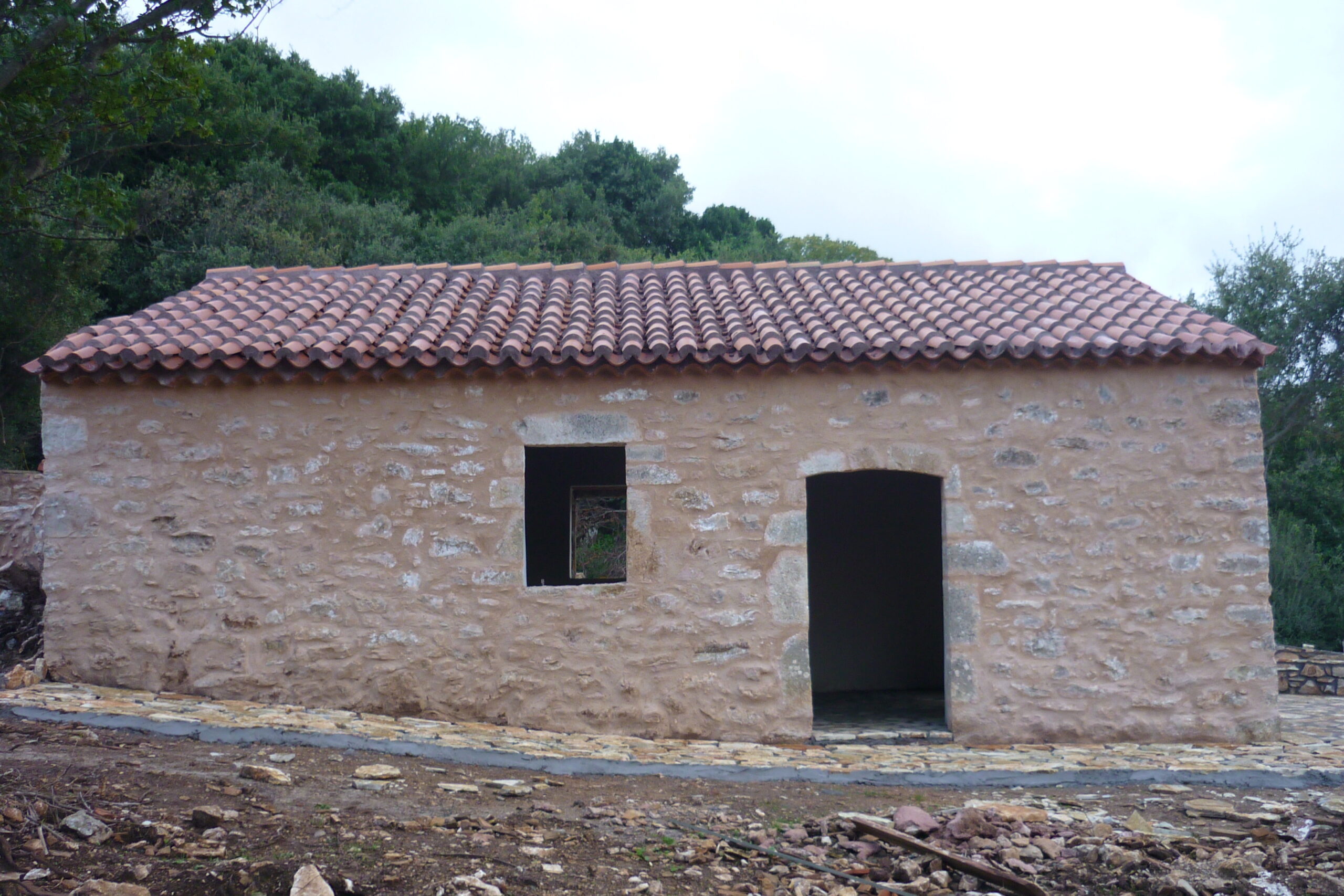
The Cultural Association of Romiri undertook the restoration of four historic churches of the village — Zoodochos Pigi, Saint Nicholas, Saint Barbara, and Saint Nicholas en Vounenis. The restoration works were carried out with respect for their original morphology and traditional materials, preserving their authentic identity. Today, the churches are open to visitors, standing as living monuments of Romiri’s religious and cultural heritage.
Exhibition
Exhibition
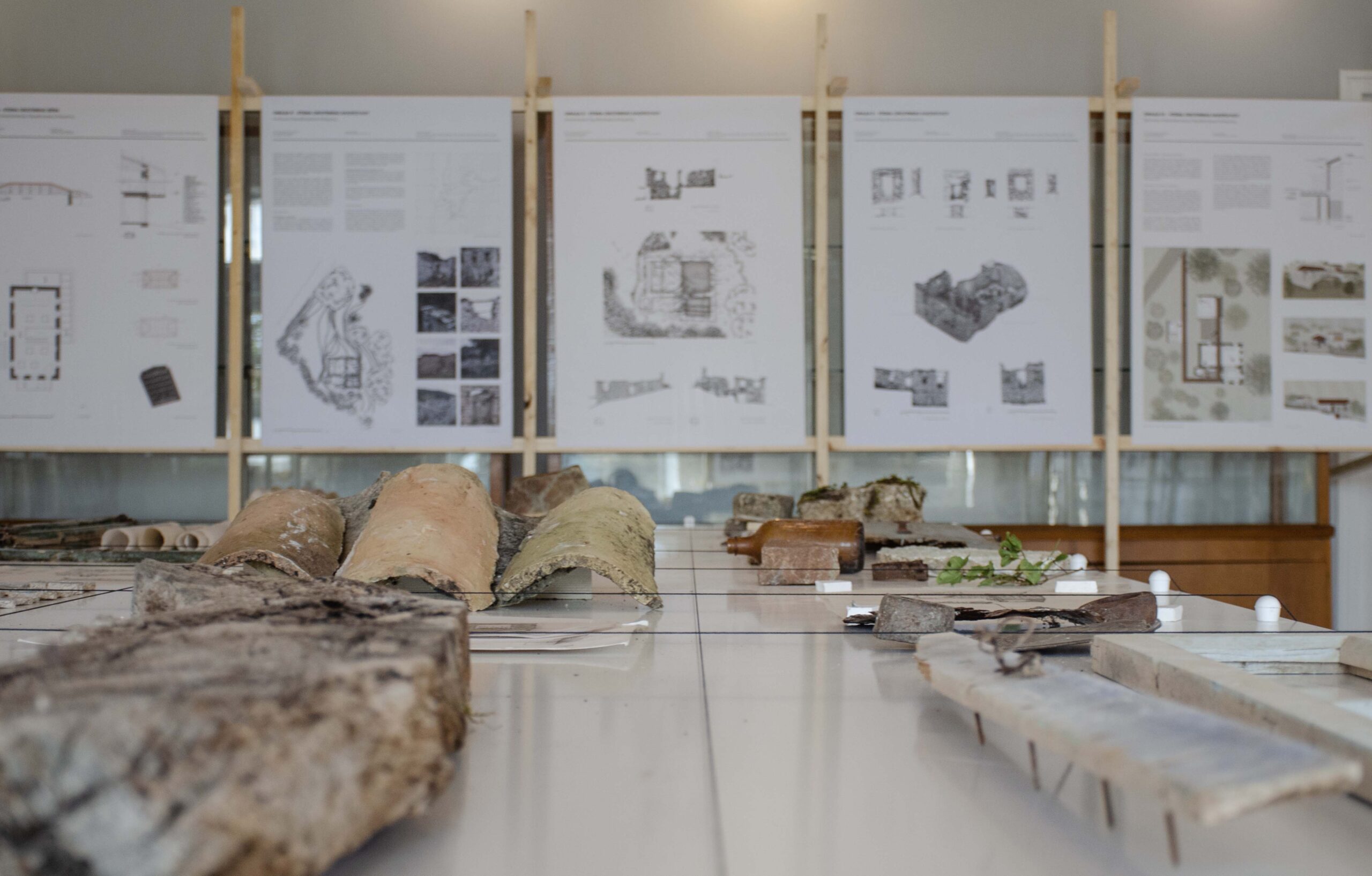
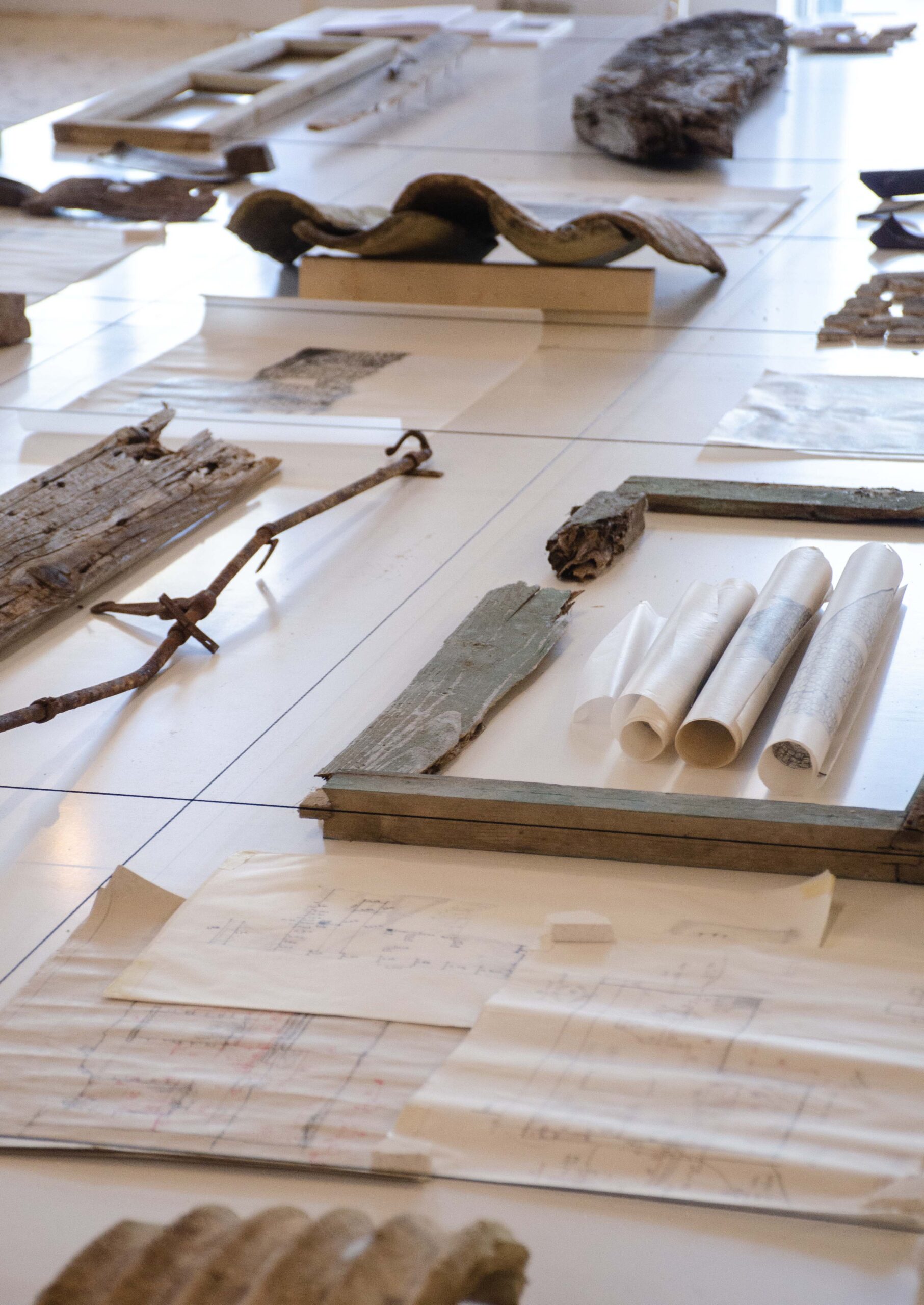
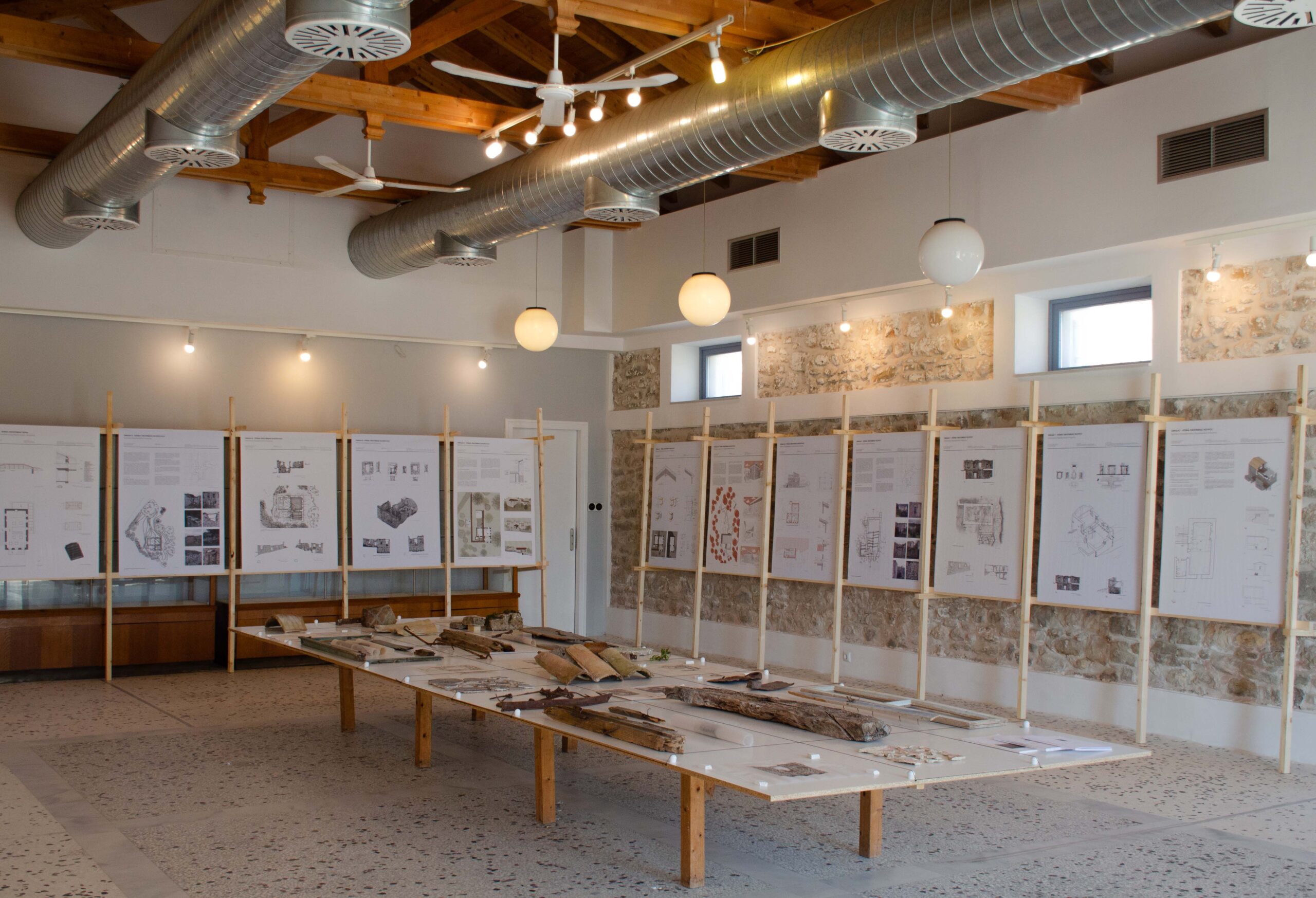
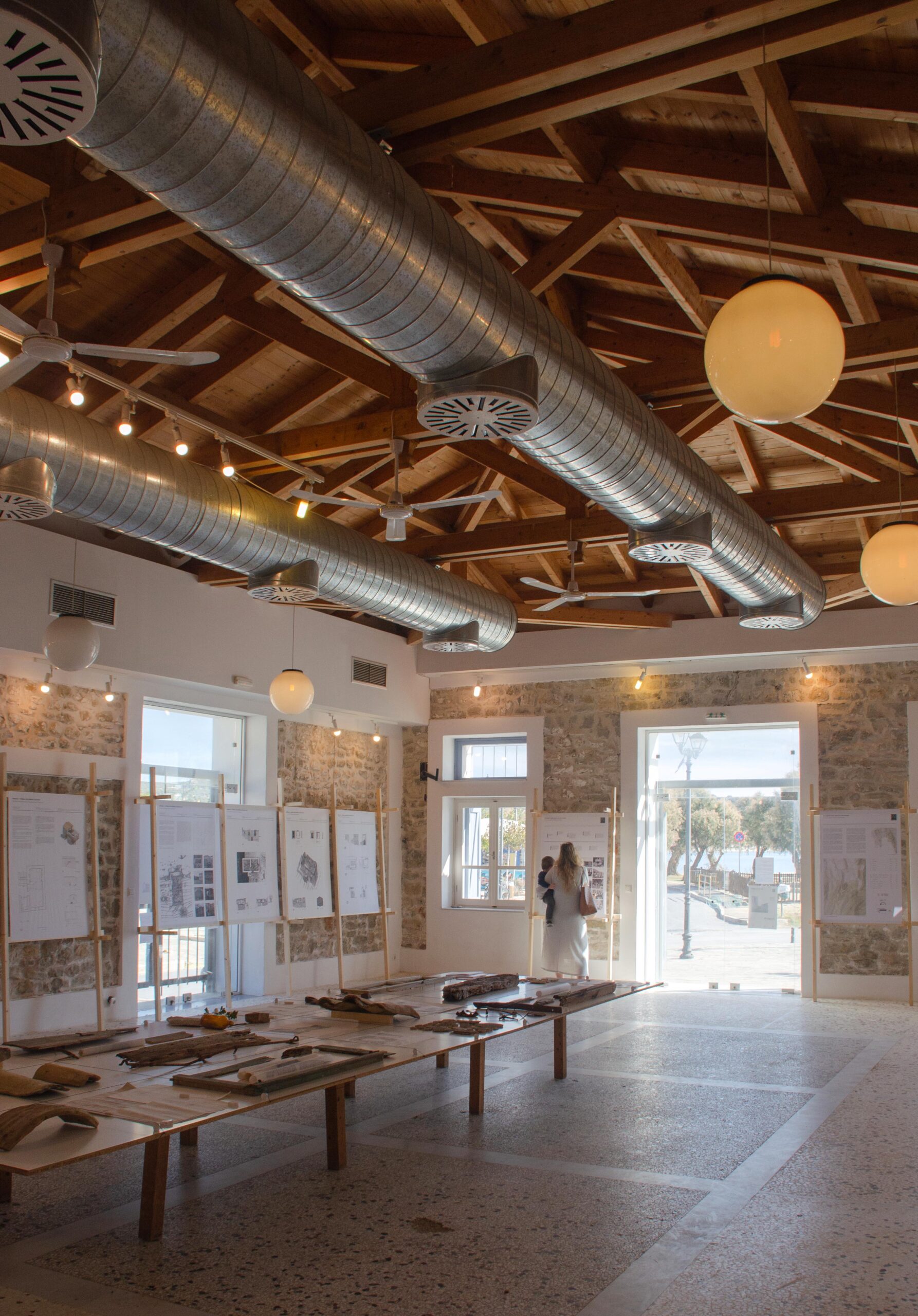
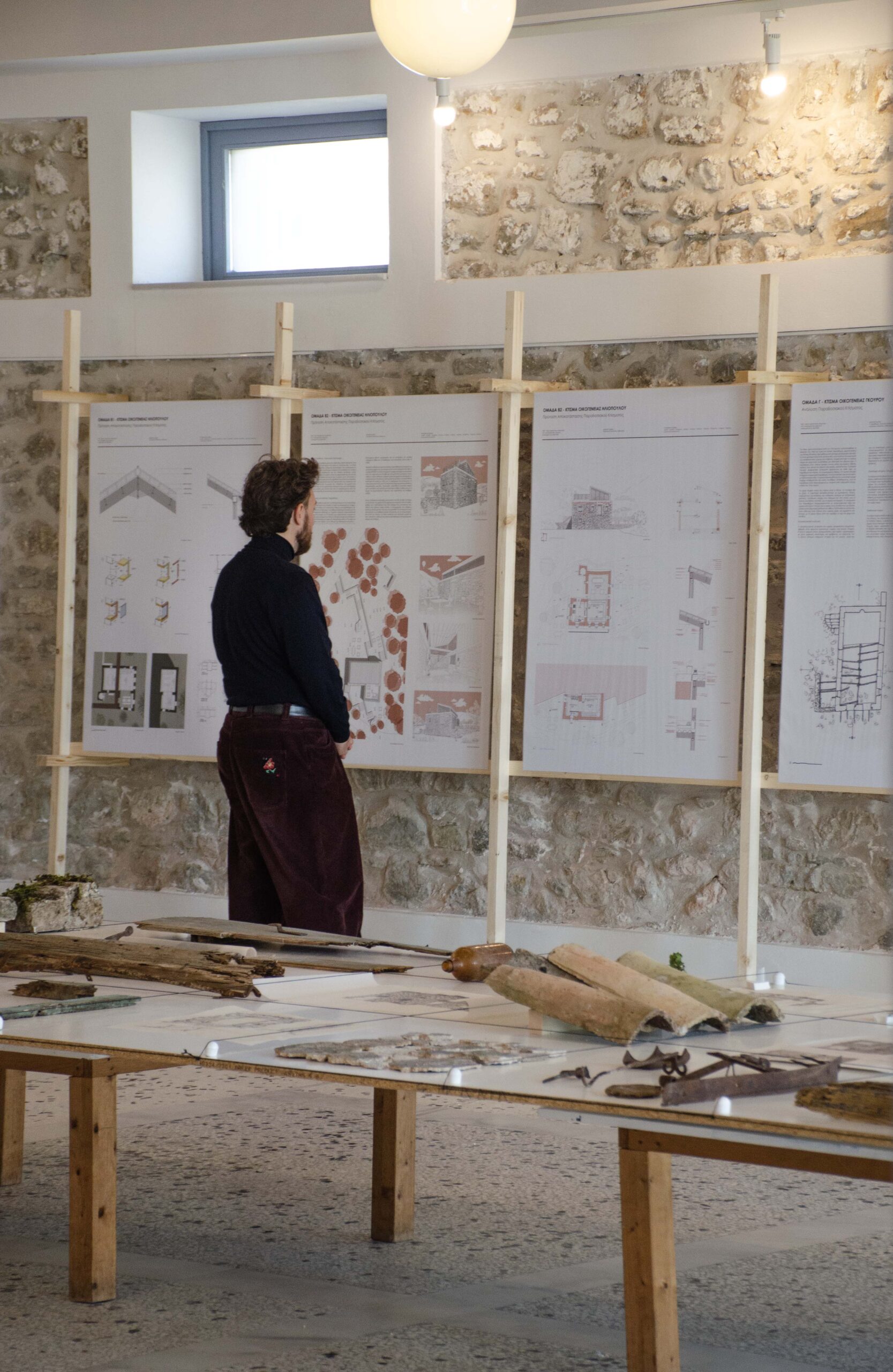
In November 2024, in Methoni, the exhibition Romiri Revival was presented, dedicated to Romiri. Through archival material, photographs, architectural drawings, and objects, visitors discovered the history, architecture, and traditions of the settlement. The exhibition highlighted the village’s journey from traditional rural life to current revival efforts, serving as a bridge of memory and inspiration for the future.